.png)


By Robin Simon, President, Harpoon Capital · About · LinkedIn · Author, The Book on DSCR Loans (Available on Amazon)

Texas offers real estate investors more range than almost any other state. There's a fast-growing military and healthcare metro in Abilene, a tech-driven capital in Austin working through a real price correction, the scale and diversification of Dallas-Fort Worth, the energy and medical economy of Houston, a Fort Hood-anchored market in Temple-Killeen, and a Gulf Coast vacation island in Galveston. Home prices in five of these six markets sit below the national median of roughly $371,774 (Zillow, July 2026).
This breakdown uses market data collected as of September 2026, the most current snapshot available heading into next year's buying season. If you're evaluating a purchase in the final months of 2026, keep in mind that your first full year of rental income, appreciation, or short-term rental revenue lands in 2027 regardless of when you close. A deal you underwrite today is already a 2027 investing decision, just one made with the freshest data available right now.
Texas is also one of the most landlord-friendly states in the country at the statewide level. There's no state rent control, no cap on security deposits, and no statewide STR license or registry. The only state-level requirement is registering with the Texas Comptroller's Office to collect the 6% state Hotel Occupancy Tax on stays under 30 days. Everything else, zoning, permitting, density caps, is set city by city, and the differences between neighboring Texas cities can be significant.
Below, we break down six Texas markets worth watching, using current data from Zillow, Redfin, BiggerPockets, and AirDNA.
Note: Home price appreciation and rent-growth figures below come from Zillow's Home Value Index (ZHVI), Redfin's median sale price data, and BiggerPockets' Market Finder, which use different methodologies and can vary from one another. We've cited both where available so you can compare.
Quick Answer: Texas's Top 6 Markets
If you only read one section, read this one.
The highest AirDNA score on this list, and it's not close
.jpg)
Abilene doesn't get the attention of Texas's bigger metros, but the numbers here are hard to ignore. AirDNA named it one of its Best Places to Invest for 2026, and the data backs that up.
Abilene's economy runs on healthcare, education, and manufacturing, anchored by Abilene Christian University and a cluster of West Texas manufacturing employers, which keeps the job base diversified for a market this size. Home prices are still rising even as several bigger Texas metros correct, and homes are moving in about a week, a sign of real, sustained buyer demand rather than a speculative spike. The rent-to-price ratio here is the strongest of any market on this list, which is usually the single best early signal of cash-flow potential in a market.
Texas keeps STR regulation almost entirely local, and Abilene has not layered on the kind of restrictive licensing seen in some bigger Texas cities. Operators still need to register with the Texas Comptroller's Office and collect the state's 6% Hotel Occupancy Tax on stays under 30 days, but there's no per-unit city license process here like there is in Austin.
Abilene posts a submarket score of 99/100, tied for the strongest on this list, with a perfect Investability score of 100 and Rental Demand score of 100. Annual revenue per listing averages $43,819, up an extraordinary 28.4% year-over-year, the fastest revenue growth of any market covered here. Average daily rate sits at $180.09 (up 24.0%) and occupancy at 78% (up 11.4%), both standout figures. Total active listings have nearly doubled, up 88.7% to 964, a sign this market is being actively discovered rather than a red flag on its own.
Financing note: Harpoon Capital offers industry leading DSCR Loans for properties in Abilene and all throughout the market area. Check out our full DSCR Loans Program here, or if you want a quote on what terms look like today, fill out this two-minute form!
Sources: Zillow Home Value Index · BiggerPockets Market Finder · AirDNA Market Data
Investor Takeaway: Every number in this section points the same direction. Abilene combines the highest rent-to-price ratio, the fastest STR revenue growth, and one of the strongest AirDNA scores of any market in this article, at a median price under $180,000. Keep an eye on the listing growth next year, but right now this is as close to an across-the-board green light as this list gets.
A real price correction in a tech hub that isn't going anywhere

Austin is the one market on this list actively correcting, and for a certain kind of investor, that's exactly the appeal.
Austin's economy is fueled by technology, with Dell, IBM, and a deep bench of startups sitting alongside the University of Texas, which anchors both talent and rental demand independent of the tech cycle. The correction here isn't a story about the city losing its economic base, it's a story about a market that ran hot for several years and is now giving some of that back. For investors who missed the earlier run-up, that's a meaningfully different entry point than what Austin offered in 2021 or 2022.
Austin's zoning code treats short-term rentals as a permitted accessory use in every zoning district, and city code explicitly states the use cannot be prohibited, a notably strong protection compared to most Texas cities. Licensing is still a real cost of entry: each unit needs its own STR license through the city's Development Services Department, licenses run for a maximum of two years and don't transfer with a sale, and operating unlicensed can draw fines of $2,000 per day. Buy a licensed Austin STR and you're still starting the licensing process over.
Austin posts a market score of 74/100, with an excellent Seasonality score of 92 but a more moderate Investability score of 57. Annual revenue per listing averages $41,372, up a modest 0.6% year-over-year, with an average daily rate of $214.83 (down 3.4%) and occupancy of 58% (up 3.6%). Total active listings sit at 14,420, down 3.6% over the past year, one of the only markets on this list where STR supply is actually contracting, which may reflect the same cooling that shows up in the sales data.
Financing note: Harpoon Capital offers industry leading DSCR Loans for properties in Austin and all throughout the market area. Check out our full DSCR Loans Program here, or if you want a quote on what terms look like today, fill out this two-minute form!
Sources: Zillow Home Value Index · BiggerPockets Market Finder · AirDNA Market Data
Investor Takeaway: Buying in Austin right now is a bet on a correction, not a growth story. If you think the pullback has run its course, a 4.4% price decline in a market with Austin's underlying job base is a very different entry point than the market offered two years ago. If you're looking for immediate cash flow instead, this isn't the market on this list for it.
Thinking About One of These Markets?
Get a same-day DSCR Loan quote for a specific deal, or browse the full Harpoon Capital DSCR Loan Program to see rates, LTV, and qualification details before you keep reading.
Scale and diversification across two major cities
.jpg)
Dallas-Fort Worth is the biggest metro on this list, and the numbers reflect a market with genuine depth on both the buy side and the rental side.
Major employers here span AT&T, Texas Instruments, and UT Southwestern Medical Center, a mix that spreads risk across telecom, tech manufacturing, and healthcare rather than leaning on any single sector. Combined with the strongest appreciation and rent growth figures of any market in this article, that kind of diversification makes the case for DFW as a core holding rather than a satellite bet. Dallas and Fort Worth also regulate STRs quite differently from each other, so don't assume the rules are uniform across the metro.
Dallas requires STR owners to register annually and obtain a permit, with penalties up to $500 per violation for unpermitted units. Fort Worth runs its registration through Localgov, the state's online tax and registration platform, and layers an 11% local hotel tax on top of the state's 6%. Both cities can and do restrict STR use by zoning district, so the specific address matters as much as the city name.
The Dallas market posts a strong AirDNA score of 88/100, driven by an excellent Seasonality score of 96 and a solid Revenue Growth score of 87. Annual revenue per listing averages $35,545, up 1.5% year-over-year, with an average daily rate of $178.87 (up 3.5%) and occupancy of 60% (down 1.1%). Total active listings sit at 13,177, up a substantial 16.1% over the past year, a market still absorbing meaningful new STR supply.
Financing note: Harpoon Capital offers industry leading DSCR Loans for properties in Dallas-Fort Worth and all throughout the market area. Check out our full DSCR Loans Program here, or if you want a quote on what terms look like today, fill out this two-minute form!
Sources: Zillow Home Value Index · BiggerPockets Market Finder · AirDNA Market Data
Investor Takeaway: DFW's case is built on breadth: the strongest appreciation and rent growth on this list, a genuinely diversified employer base, and a deep STR market to boot. The trade-off is that Dallas and Fort Worth run separate STR rulebooks, so treat this as two markets to underwrite, not one.
The most affordable big-metro entry point on this list

Houston is the fourth-largest city in the country, and it still offers the cheapest entry point of any major metro covered here.
Energy, healthcare, and technology anchor the Houston economy, with ExxonMobil and the Texas Medical Center, the largest medical complex in the world, providing a level of employment depth few metros can match. A large, diverse metro at this price point is unusual, and it's part of why Houston keeps showing up on cash-flow-focused investor shortlists year after year.
Houston's STR ordinance is brand new. The city passed it in April 2025, and it took effect January 1, 2026, so this is the first full year it's applied to investors. Each unit needs its own certificate, costing $275 plus a small annual administrative fee, and the certificate doesn't transfer with a sale. Combined with the state's 6% Hotel Occupancy Tax and Houston's local rate, the total tax stack runs to roughly 17%, a real number to build into your underwriting on any Houston STR deal.
Houston posts a market score of 64/100, the second-lowest on this list, weighed down by moderate Investability (63) and Rental Demand (59) scores despite an excellent Seasonality score of 96. Annual revenue per listing averages $30,576 (up 2.4% year-over-year), with an average daily rate of $163.95 (up 6.7%) and occupancy of 56% (down 4.0%). Total active listings sit at 16,736, up 6.1% over the past year, the largest STR inventory of any market on this list.
Financing note: Houston's size and diversified job base make it a natural fit for Multifamily DSCR loans as well as single-family, with entity vesting available for LLC and partnership buyers scaling a portfolio here.
Sources: Zillow Home Value Index · BiggerPockets Market Finder · AirDNA Market Data
Investor Takeaway: Houston is the value play among Texas's major metros: real economic diversity at the lowest price point of any big city on this list. The new STR ordinance is untested at scale, so if you're buying for short-term rental income specifically, budget conservatively until a full year of data under the new rules is in.
Fort Hood-anchored demand at some of the lowest prices in Texas
.jpg)
Temple-Killeen offers a similar thesis to military-anchored markets elsewhere in the country: durable rental demand tied to a base rather than a local economic cycle, at a price point well below the state average.
Fort Hood, one of the largest military installations in the world, sits at the center of this economy, with Carl R. Darnall Army Medical Center adding a healthcare layer on top of the base itself. Military postings create a tenant base that turns over on a predictable schedule rather than reacting to broader economic conditions, the same dynamic that shows up in military-anchored markets elsewhere in the country. The appreciation rate here, the strongest of any market in this article, is a notable data point for a market this affordable.
Killeen posts a submarket score of 80/100, with a strong Investability score of 78 and an excellent Seasonality score of 95, though Rental Demand (59) lags behind the state's stronger STR markets. Annual revenue per listing averages $25,064 (up 1.5% year-over-year), the lowest dollar figure on this list and consistent with the market's overall price point. Average daily rate sits at $126.82 (up 2.5%) and occupancy at 59% (down 0.7%). Total active listings sit at 1,153, up 4.0% over the past year.
Financing note: BRRRR investors tend to do well in Temple-Killeen given the combination of low entry prices and steady military-driven rent, with entity vesting and flexible prepayment penalty structures available for investors scaling a portfolio here.
Sources: Zillow Home Value Index · BiggerPockets Market Finder · AirDNA Market Data
Investor Takeaway: This is a straightforward buy-and-hold thesis: a stable, base-driven tenant base, the highest appreciation rate on this list, and entry prices under $235,000. It won't be the highest-revenue market here, but it may be one of the least likely to surprise you.
A beaten-down vacation market with the highest revenue on this list
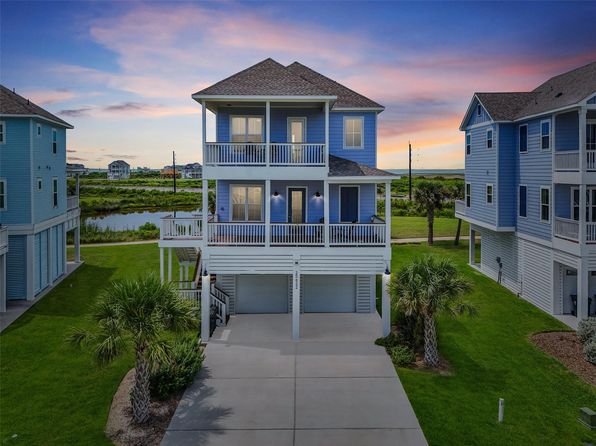
Galveston is Texas's premier Gulf Coast vacation destination, and it's also the market on this list with the lowest AirDNA score. Those two facts aren't in conflict, and understanding why is the whole point of this section.
Here's the thing about Galveston's AirDNA score: it's dragged down by a weak Seasonality reading, not by weak demand. This is fundamentally a summer-and-holiday vacation market, and AirDNA's scoring penalizes that kind of seasonal concentration even when the underlying revenue is strong. Galveston's Annual Revenue and Average Daily Rate are actually the highest of any market in this article, a genuinely unusual combination of a low headline score and the best raw revenue numbers on the list.
The price action tells the more interesting story. Several Galveston neighborhoods have corrected sharply over the past year, well beyond what the island's overall tourism economy would suggest, and homes are sitting on the market for months rather than weeks. Distressed sellers and thin buyer competition is exactly the setup that tends to produce aggressive, low-ball-friendly negotiating conditions for investors with financing already lined up. The 32 miles of beach, the historic Strand District, and year-round cruise and convention traffic haven't gone anywhere; what's changed is how much leverage buyers currently have.
Galveston's STR framework runs through the Park Board of Trustees rather than a standard city permitting office. Registration costs $250 annually, and operators collect a 9% local Hotel Occupancy Tax on top of the state's 6%, a 15% total tax stack. The city is generally regarded as one of the more STR-friendly jurisdictions on the Texas coast, with both owner-occupied and non-owner-occupied rentals permitted.
Galveston's AirDNA score sits at 53/100, the lowest on this list, driven almost entirely by a weak Seasonality score of 45. Investability (78) and Revenue Growth (80) both score well. Annual revenue per listing averages $45,002, up 5.5% year-over-year and the highest dollar figure of any market in this article. Average daily rate is $318.13 (up 3.3%), also the highest here by a wide margin. Occupancy sits at 45% (down 0.2%), the lowest on this list, which is the direct result of the seasonality effect rather than a demand problem. Total active listings sit at 7,285, down 2.1% over the past year.
Financing note: Distressed Galveston deals often need creative underwriting. Harpoon Capital can qualify Galveston purchases on TTM actuals or STR Narrative revenue projections, and offers cash-out refinance once a value-add property is stabilized, useful for investors buying below market from a motivated seller.
Sources: Zillow Home Value Index · Redfin Market Data · AirDNA Market Data
Investor Takeaway: Don't read Galveston's AirDNA score as a warning sign. Read it as a seasonality quirk sitting on top of the highest STR revenue numbers on this list, in a market where distressed pricing in specific neighborhoods is creating real negotiating leverage right now. This is the one market on this list where the headline score and the actual opportunity point in different directions.
Source: AirDNA, current as of 2026. Scores and figures reflect each market or submarket as defined by AirDNA and may not correspond 1:1 with city or county boundaries.
A few patterns stand out. Abilene is the clear outlier on revenue growth, up 28.4% year-over-year against single digits almost everywhere else. Galveston's revenue and ADR lead the state in dollar terms despite the lowest headline score, a reminder that the composite AirDNA score and raw earning power don't always move together. Austin is the only market here seeing STR listings actually shrink, either a sign of cooling demand or of consolidation among stronger operators.
Texas's real estate landscape offers a strategy for nearly every type of investor:
Market-level data is a starting point, not a substitute for underwriting the specific property, neighborhood, and rental strategy in front of you. Texas leaves almost all short-term rental regulation to individual cities, and in Galveston's case, to a Park Board rather than a typical city office, so confirm the specific rules for your address before you close.
Yes, Texas is widely considered one of the most landlord-friendly states in the country. There's no rent control, no cap on security deposits, and no statewide short-term rental license or registry. Local cities do set their own STR zoning and permitting rules, so confirm the specific ordinance for your city before you buy.
No. Out-of-state and first-time investors can buy investment property in Texas without any license. A DSCR loan qualifies you primarily based on the property itself rather than your personal income or professional credentials, which is part of why it's such a common financing tool for out-of-state buyers.
A DSCR (Debt Service Coverage Ratio) loan qualifies a property primarily based on the property (its value, value and location) relative to its mortgage payment, rather than the borrower's personal income or tax returns. If the property's projected or actual rent covers the mortgage payment (a DSCR of 1.00x or higher), it's generally easier to qualify, and Harpoon Capital also offers options for deals below 1.00x.
Galveston's AirDNA score is pulled down almost entirely by a weak Seasonality score, which reflects how concentrated its tourism demand is around summer and holidays. Its actual Annual Revenue ($45,002) and Average Daily Rate ($318.13) are both the highest of any Texas market in this article, so the low composite score reflects seasonal concentration, not weak underlying demand.
Harpoon Capital's DSCR loan program allows as little as 15% down on qualifying purchases, up to 85% LTV, with cash-out refinances available up to 80% LTV. Exact terms depend on the property, credit profile, and DSCR ratio. Fill out our two-minute quote form to see specific numbers for your deal.
Ready to Run the Numbers on a Texas Deal?
Whether you're eyeing Abilene's growth numbers or a distressed deal in Galveston, get a same-day rate and terms with our two-minute DSCR quote form, or explore the full Texas DSCR Loans Program to see how we qualify the property, not just the borrower.
Sources: Zillow Home Value Index & Rental data, Redfin housing market data, BiggerPockets Market Finder, AirDNA market and submarket data (airdna.co). Data collected as of September 2026, ahead of the 2027 investing season.
This article is for informational purposes only and does not constitute investment, legal, or financial advice. Harpoon Capital encourages investors to conduct independent due diligence before making any real estate investment decision.