.png)


For DSCR Loans secured by a property in a Special Flood Hazard Area (SFHA) — designated Flood Zone A or V—DSCR Lenders will require flood insurance as a loan condition. These zones represent areas at high risk of flooding and are identified in FEMA’s Flood Insurance Rate Maps (FIRMs).
This requirement is uncommon but not rare, approximately 11.2 million single-family homes in the U.S. (about 12% of all such homes) are located in areas classified as facing high flood risk, meaning they are within a mandatory flood insurance zone. This percentage may be higher in certain coastal and river-adjacent regions.
Flood insurance requirements are determined by an official Flood Certificate. This is a lender-generated and not a borrower-provided document, however the savvy borrower can look up the Flood Zone beforehand to be fully prepared. Most DSCR Lenders will order this early in the loan process (typically after application but before issuing a Term Sheet) to confirm the property’s flood zone status. If the certificate shows Flood Zone A or V, flood insurance becomes a requirement for closing, if not in Flood Zone A or V, its not required. Also note that if the property has not yet been mapped by FEMA (resulting in no designated flood zone for the specific address), flood insurance could still be required by the DSCR Lender if they deem flood risk present.

Q: When is flood insurance required for a DSCR loan?
A: Flood insurance is required whenever the property is located in a FEMA-designated Special Flood Hazard Area (Flood Zone A or V) as confirmed by the lender’s official flood certificate. Around 12%, or one in eight, homes in the US are in Flood Zones.
To satisfy a flood insurance condition, DSCR Lenders will typically have similar documentation requirements as they do for property insurance, which include a Flood Insurance Policy Declaration Page, which must show the named insured (matching title vesting), property address, coverage amount, policy term, deductible, and correct mortgagee clause as well as Evidence of Premium Paid, or a paid receipt from the insurer or agent, or invoice showing the premium will be paid at closing, in which case it would be required to be an item on the closing statement.
While exact requirements vary by lender, most follow FEMA/NFIP and Fannie Mae guidelines, which include a coverage amount of the lesser of: 100% of the insurable value (replacement cost of the improvements), the loan amount, or the maximum NFIP coverage limit ($250,000 for 1–4 unit residential properties). In addition, the policy term generally must cover at least 12 months from the closing date (or at least 45 days beyond closing for refinance transactions) and the deductible must not exceed the maximum allowed by the NFIP, generally 5%.
Additionally, for DSCR Loans secured by condo units within a condo project that is within a Flood Zone, there will likely be flood insurance requirements for the entire condo building as well. In most cases, the HOA master insurance policy will include flood insurance for the entire condo project.
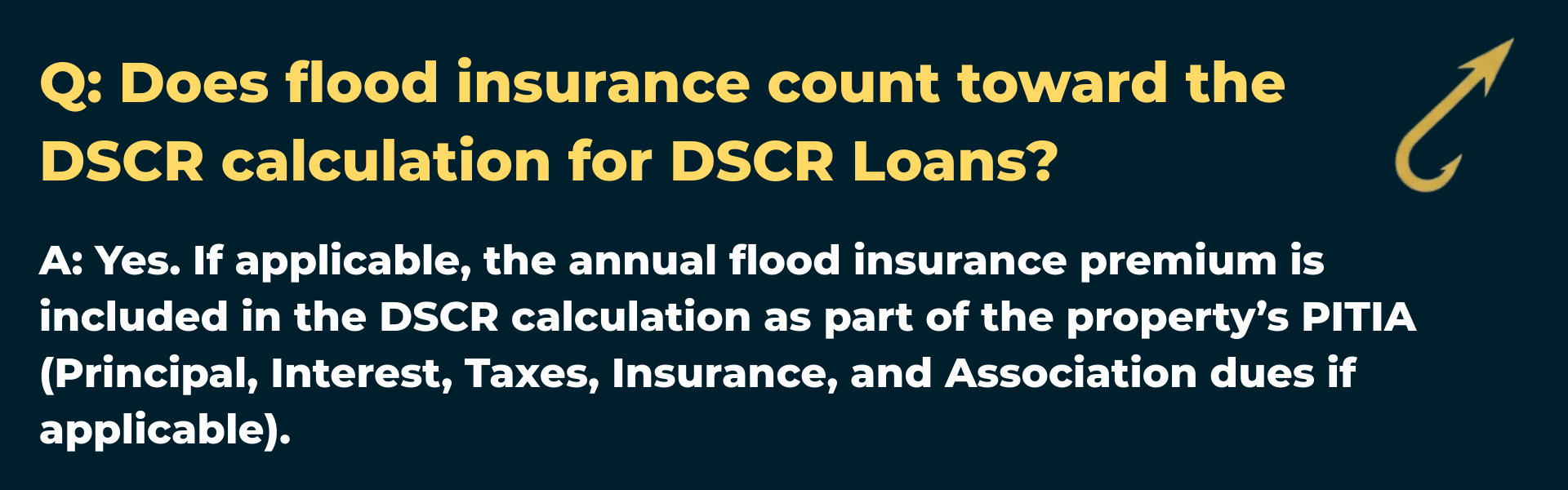
Q: Does flood insurance count toward the DSCR calculation for DSCR Loans?
A: Yes. If applicable, the annual flood insurance premium is included in the DSCR calculation as part of the property’s PITIA (Principal, Interest, Taxes, Insurance, and Association dues if applicable).
Up Next: Learn what documents you will need to provide if you utilize an entity such as an LLC, Partnership or Trust to obtain a DSCR Loan.
© 2026 Harpoon Capital LLC. All Rights Reserved. WARNING: Unauthorized distribution, copying, or sharing of this guide is a violation of U.S. Federal Law and is punishable by civil penalties of up to $150,000 per violation. We aggressively enforce our intellectual property rights.